Where to buy The University of Michigan fake certificate?
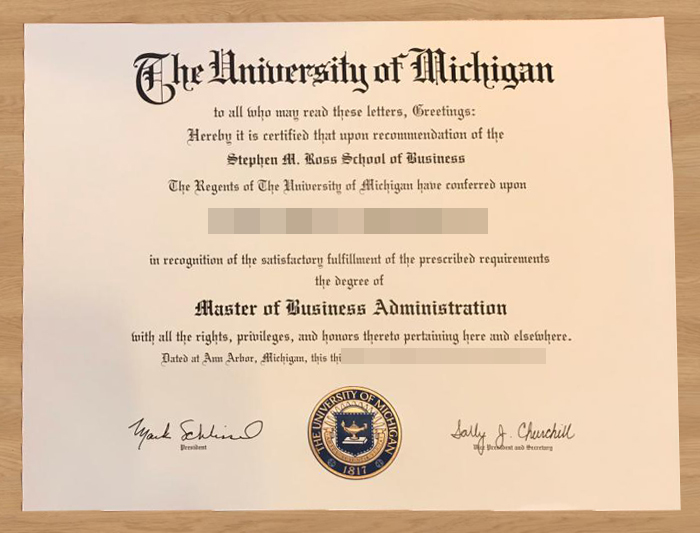
The University of Michigan occupies a space in American higher education that is difficult to categorize neatly.It is a public institution,yet it competes with private elites for research funding,faculty talent, and student applications.#purchase The University of Michigan diploma.It sits in Ann Arbor, a city of roughly120,000,yet commands a global research footprint that spans from clinical trials in oncology to computer science PhDs launching academic careers on three continents.Founded in 1817—twenty years before Michigan became a state—it is older than the state it serves,a historical accident that gave it a head start on nearly every other public university in the country.
buy realistic looking degree
How to get a The University of Michigan degree?The trajectory continued through the twentieth century,driven by a combination of state investment,philanthropic support,and a research culture that attracted figures like Francis Collins,who discovered the genes for cystic fibrosis and neurofibromatosis, and James Neel,who unlocked the genetic cause of sickle-cell anemia.
Today,U-M enrolls over 53,000 students across its Ann Arbor, Dearborn,and Flint campuses,with approximately 9,000 faculty members supporting more than 260 degree programs.The Ann Arbor campus alone accounts for the vast majority of that scale.It is the largest and most sought-after public research institution in Michigan,and by several measures the most research-intensive public university in the United States.
The numbers tell a story of institutional ambition that few public universities can match. Through the first nine months of fiscal year 2026,U-M’s research expenditures totaled $1.56 billion a slight decline of 1.8% from the previous year but still placing it among the top research universities nationally.The National Science Foundation has ranked U-M Ann Arbor as the top public research university in the U.S. and second overall, a position built on decades of consistent federal investment .
That investment comes from multiple sources.In May 2026, Representative Debbie Dingell announced $72.2 million in federal grants from the Department of Health and Human Services for U-M,funding projects ranging from aging research and cancer biology to cardiovascular disease and mental health.These are not abstract line items.They represent clinical trials,laboratory discoveries,and training programs that feed directly into Michigan Medicine, the university’s academic medical center,which employs nearly 20,000 staff and operates or affiliates with 15 hospitals across the state.